
Techno history as re-enactment
Tanzflächen der Wiedervereinigung/Dancefloors After 1989. Exhibition 3.10-.9.11.2026, SOURCE im Kraftwerk, Köpenicker Str. 70, Berlin
In recent years, there have been numerous exhibitions on the history of techno across several countries, regions and cities. The idea of describing techno as the 'sound of reunification' is also nothing new — publications by Ulrich Gutmair, Felix Denk and Sven von Thülen allude to this thematic connection. In that sense, it was no surprise that the current exhibition, 'Tanzflächen der Wiedervereinigung/Dancefloors After 1989', featured much familiar material. Yet it also offers surprises and lasting impressions.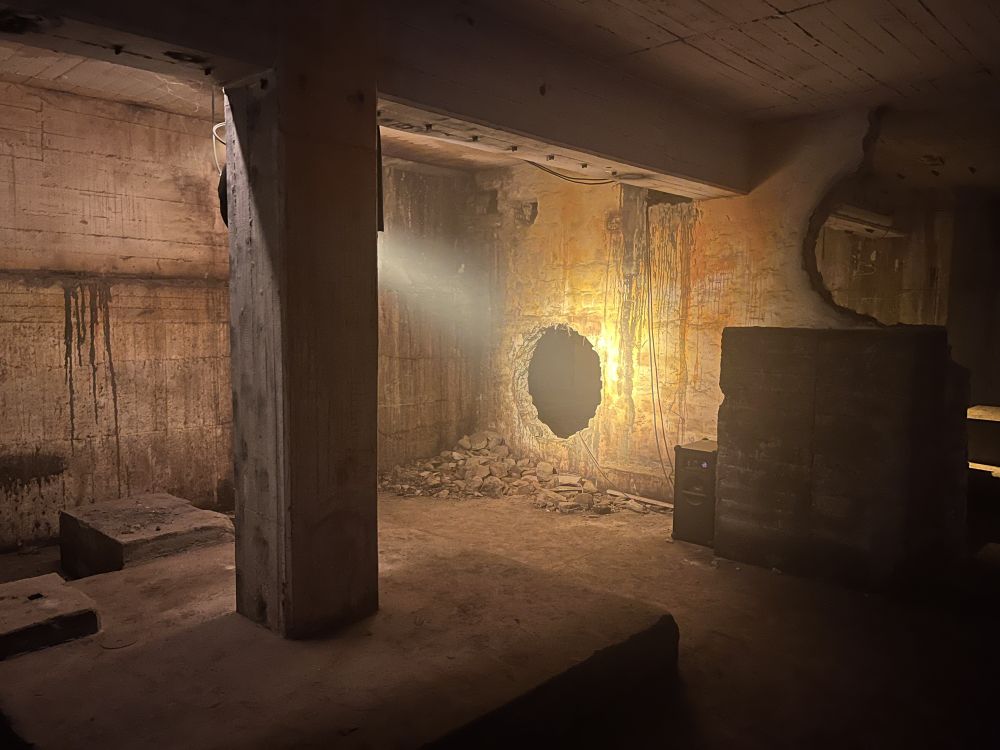
© Matthias Pasdzierny
But first, let's have a look at the facts. This exhibition marks the 25th anniversary of Clubcommission Berlin e.V, who initialized and curated the project in cooperation with Diskobabel e.V. and in collaboration with Archiv der Jugendkulturen e.V. and Office ParkScheerbarth, funding organisations have been Stiftung Orte der deutschen Demokratiegeschichte, the Berlin Senate Department for Culture and Social Cohesion and Musicboard Berlin.
One of the project's most important partners provided the most impressive exhibit. In fact, the word 'exhibit' doesn't quite capture what it's all about: we're talking about the basement rooms of Kraftwerk Berlin, the large building which hosts Tresor — a venue central to Berlin's clubbing history — as well as other important clubs such as Globus and OHM, for many years now. In its raw, dirty and seemingly derelict state, the basement of this spacious and legendary venue, previously largely unknown and unused by the public, provides the ideal setting for a multisensory re-enactment of Berlin’s early 1990s techno scene, which has since become shrouded in myth and legend. 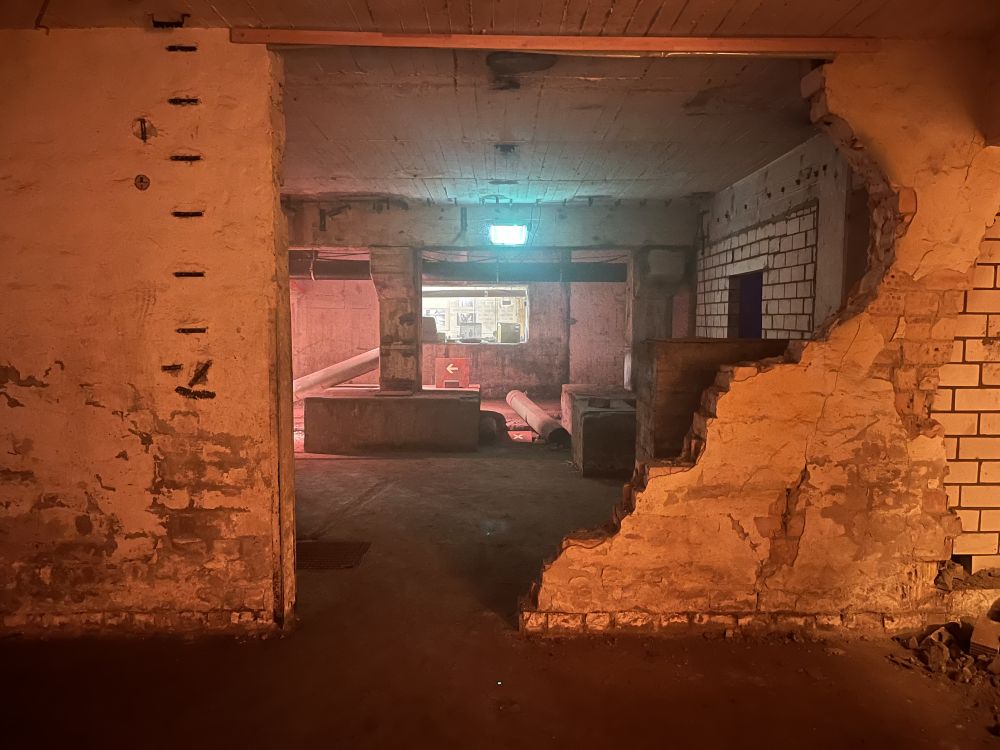
© Matthias Pasdzierny
During a phone call earlier this year, Dimitri Hegemann — the co-founder of both the original and the new Tresor clubs — told me about his vision for the exhibition. He wasn’t interested in historical information, documentation or factual accuracy. Instead, he wanted to create an immersive space in which younger generations could experience the 'ruined landscape' of reunified Berlin, even if only temporarily. He wanted to recreate the feeling of opening up an abandoned basement after a long time, capturing it with all senses, and filling it with new life: dance and deep bass, strobe lights and dry-ice fog. Hegemann told me that he didn’t really care what kind of 'historical crab' the club commission would add on top of that.
Accordingly, visitors enter the exhibition through the usual Tresor entrance, but then turn down into the basement, where spacious rooms open up behind black rubber mats after a few winding corridors, like a sort of stalactite cave at the end of the Cold War. At first, the spatial atmosphere dominates, with dust, dirt and a little fog, as well as dim lighting. Here and there, there are specially commissioned art and video installations. After a few more turns and low passageways — before entering, all visitors are asked to sign a waiver noting the dangers of the derelict site — you finally reach the two main exhibition halls in the historic section, curated by the Club Commission. The concept behind this area: 'Tanzflächen der Wiedervereinigung therefore does not tell the one story of reunification. It tells many. At the same time.' (https://tanzflaechen-der-wiedervereinigung.de/en/ausstellung/)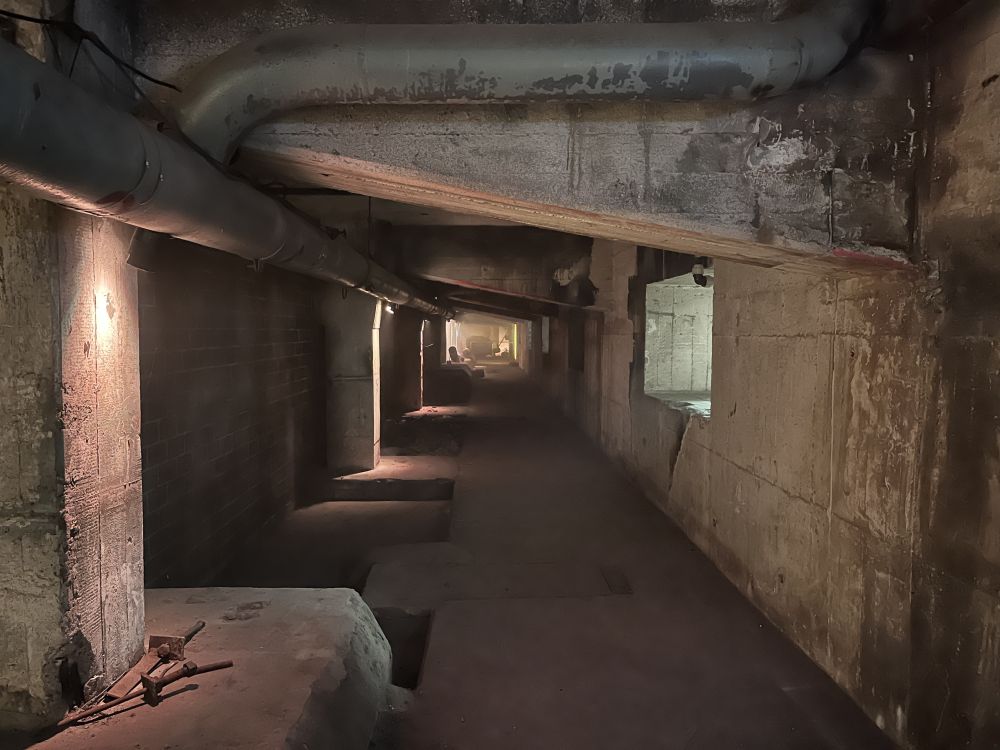
© Matthias Pasdzierny
This challenge has been solved to a greater or lesser extent, although, as mentioned, many of the details are already known from earlier publications. Exhibits such as flyers, decorations, videos and photos from the collections and initiatives represented in the Techno Heritage Network, including the Archiv der Jugendkulturen and the theatre collective Treuhand Techno, lend the exhibition a special sense of authenticity and tangibility.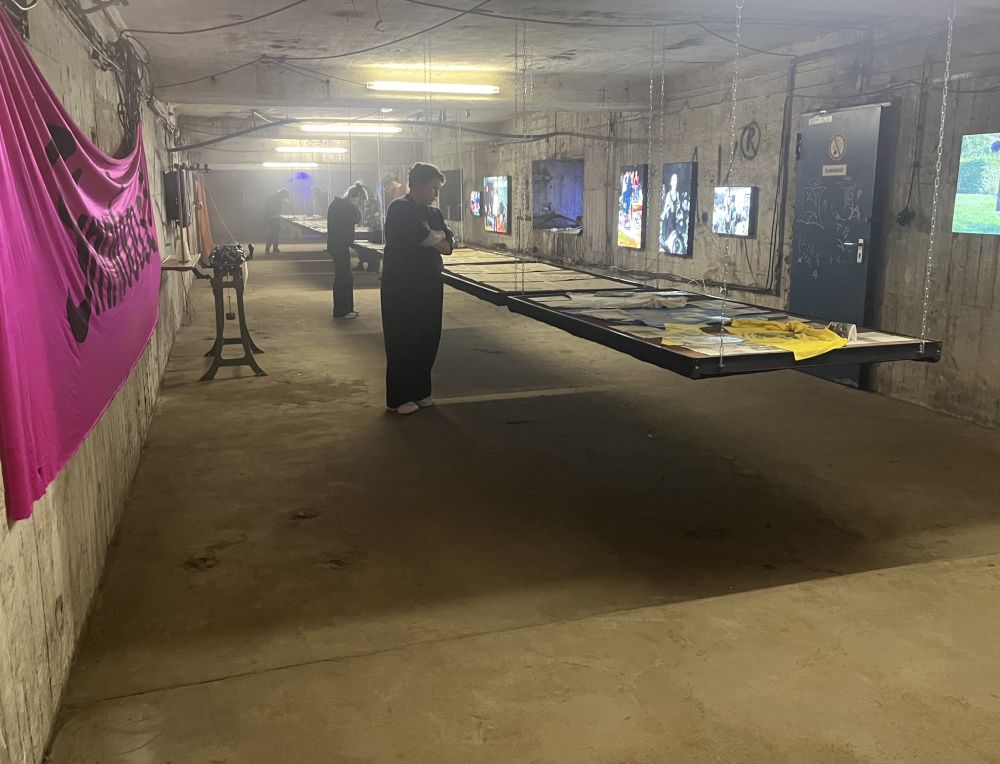
© Matthias Pasdzierny
The exhibition's success certainly proves its worth — the strictly limited tickets sold out in no time, and there was quite a lot of hype surrounding the exhibition on social media. It left the author of this blog not only with dirty trousers (yeah!), but also with the strange feeling that this kind of re-enactment makes you want to turn such spaces back into club venues and host parties there rather than holding exhibitions. As with previous MOMEM exhibitions, one hopes that the considerable effort of such projects will result in sustainable outcomes (such as catalogues) that will be permanently available to support the actual historiography of techno. As it stands, the impression remains of a — albeit conceptually impressive — 'eventisation' of techno heritage.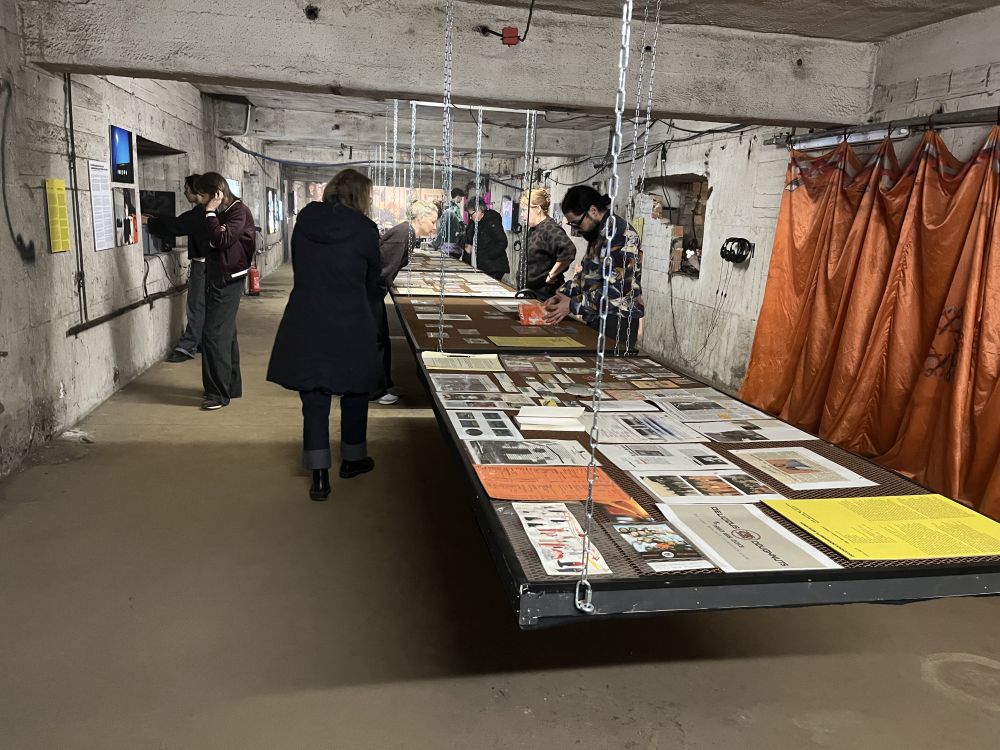
© Matthias Pasdzierny